


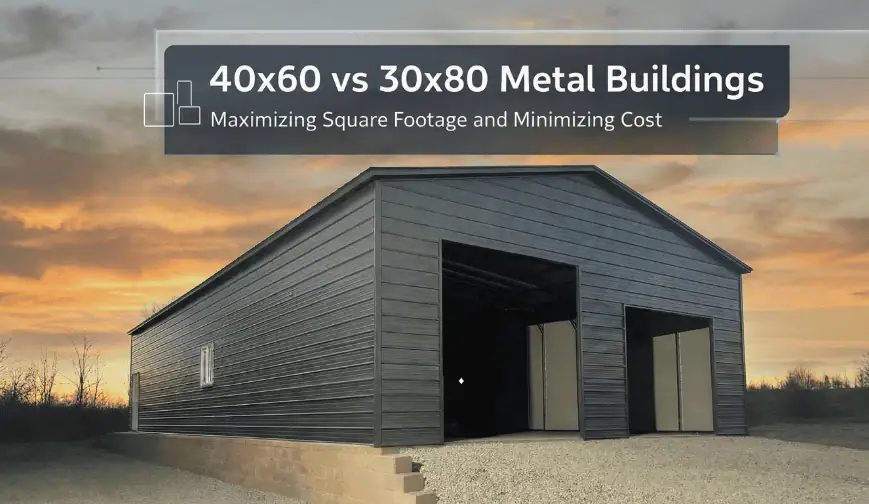
40x60 or 30x80?
People sometimes assume that if two buildings have the same square footage, they’ll work the same way. In practice, that’s rarely how it plays out.
A 40x60 metal building and a 30x80 both add up to 2,400 square feet, but the layout changes the feel of the space quite a bit. One spreads outward, the other runs longer. That small shift can affect things like parking room, door placement, and how the interior ends up being used over time.
Main Highlights
- Both buildings provide 2,400 square feet of interior space
- A 40x60 layout is wider across the front
- A 30x80 building runs longer from front to back
- Wider buildings tend to work well for garages
- Longer buildings can be useful for RV or trailer parking
- Door placement often feels simpler on wider buildings
- Long layouts can support straight workflow setups
- Structural span and upgrades can influence price
Are 40x60 and 30x80 Metal Buildings Really the Same Size?
Both structures provide the same total square footage. But once you start thinking about how the space is used, the shape of the building starts to matter. A 40x60 footprint spreads that 2,400 square feet across a wider structure. A 30x80 pushes the space further toward the back of the property.
Some buyers like the open feel of a wider building. Others prefer the longer shape because it separates areas naturally. It really comes down to how the building will function once everything is inside.
How Does Each Footprint Feel in Real Life?
When a building is empty, the difference between these two layouts might not seem huge. But once vehicles, shelving, or workstations move in, the layout becomes more noticeable. Width affects turning room and side-by-side activity. Length affects how equipment or storage lines up.
1. 40x60
- Wider working footprint
- Multiple garage bays across the front
- Wider turning space for vehicles
- Large work areas placed side by side
- Easier door placement along the front wall
2. 30x80
- Longer space for RV or trailer parking
- Natural front-to-back storage layout
- Can separate interior areas more easily
- Linear layout that supports equipment movement
Which Building is Better for Your Situation?
No single building type works for every property owner. The better footprint usually depends on what will happen inside the building on a regular basis.
1. Multi-Vehicle Garage
For garages, many people lean toward a 40x60 building. The wider front wall makes it easier to install multiple garage doors and park vehicles without constantly rearranging them.
2. Workshop or Fabrication Shop
Workshops with several workstations often benefit from the extra width of a 40x60 structure. Tables, tools, and fabrication areas can sit next to each other more comfortably.
Some shops, however, follow a step-by-step workflow. In that situation, a 30x80 building can work well because the longer layout allows work to move from one end of the building to the other.
3. RV and Trailer Storage
Longer vehicles typically fit more naturally in a 30x80 metal building. The deeper footprint allows them to park straight inside without using up the building’s width.
4. Small Warehouses
Both footprints can work for light warehouse use, but a 40x60 building offers easier movement for equipment or carts. A 30x80 layout may allow longer rows of shelving.
5. Barns or Agricultural Storage
Farm equipment often benefits from wider turning space, which can make a 40x60 building attractive. A 30x80 layout can still work well for organized storage such as hay rows or lined equipment.
Why Two Buildings with the Same Square Footage Can Price Differently
Even though both buildings offer 2,400 square feet, the cost may not be identical. Several design choices and structural factors can influence the final price:
- Width and clear span demands
Wider buildings usually require stronger structural framing. Supporting a larger span across the building may involve heavier steel components. - Door count and placement
Large garage doors or roll-up doors change how the building frame is designed. More doors or larger openings often increase materials and installation work. - Leg height and clearance
Extra wall height requires additional steel and structural support. Taller buildings are useful for large vehicles or equipment, but can increase the overall cost. - Roof style (regular, A-frame, or vertical)
Roof design affects drainage and durability. Vertical roofs are often chosen for larger buildings because they shed water and debris more effectively. - Certifications
Some areas require buildings to meet wind or snow load standards. Certified buildings include additional reinforcement to meet those requirements. - Site prep, slab, and access
Preparing the building site also affects cost. Land clearing, grading, and installing a concrete slab are common parts of the process.
Best Customization Options for 30x80 and 40x60 Metal Buildings
One reason metal buildings are so popular is the ability to customize them to fit how you live. Buyers can adjust features so that a structure works better for their property and day-to-day activities. When you buy, you’ll be able to customize:
- Door type, quantity, and size
Large doors allow vehicles and trailers to move in and out without difficulty. - Walk-in doors
Entry doors make everyday access easier without opening the main garage doors. - Windows
Windows allow daylight inside the building and can brighten work areas. - Open vs enclosed sides
Some structures include partially open walls for ventilation. Others are fully enclosed to protect equipment and storage from the weather. - Roof style
Different roof styles affect both appearance and performance. Vertical roofs are commonly chosen for larger buildings. - Leg height
Additional wall height provides extra clearance for tall vehicles or storage racks. - Color choices
Metal panels are available in a variety of colors so buildings can match nearby structures. - Insulation planning
Insulation helps regulate interior temperature and reduce condensation. - Certification options
Certified buildings are engineered to meet local wind and snow load requirements.
Site Prep and Foundation Requirements
Before a metal building goes up, the site needs a bit of preparation. Proper groundwork helps the structure stay stable and perform well over time. Follow these steps for smooth results:
1. Choose a Location
Pick a spot that allows enough room for delivery trucks and installation crews. The location should also provide easy access for vehicles entering the building.
2. Clear and Grade Land
Trees, debris, and rocks need to be removed. After clearing the area, the ground is leveled to create a stable base.
3. Plan Drainage
Water should move away from the building instead of toward it. Proper grading helps prevent standing water around the foundation.
4. Secure Permitting
Local building departments may require permits before installation begins. These permits confirm the structure meets safety standards.
5. Install Concrete Slab
Many enclosed metal buildings are installed on a concrete slab. The slab must be level and fully cured before the frame is anchored.
Why Buy from Direct Metal Structures?
Direct Metal Structures works with property owners who want reliable metal buildings for any project. We supply structures that are durable, engineered for your climate, and ready for long-term use.
When you work with us, you’ll always receive:
- Certified metal buildings
- Included delivery and installation
- Leading warranties
- Local knowledge of regulations
- Customizable designs
- Flexible financing and RTO plans on select structures
Want to know more? Call us at [Phone Number] to learn more about our 30x80 and 40x60 metal buildings. We’ll walk you through the design process, answer all your questions, and create a design that fits your way of life.
Your Questions, Answered
1.
Which is better for a garage: 40x60 or 30x80?
Answer: Many homeowners prefer the 40x60 layout because the wider front allows multiple garage doors.
2.
Which footprint is better for RV or trailer storage?
Answer: A 30x80 building is often better suited for longer vehicles due to its deeper layout.
3.
Why can two 2,400 sq ft metal buildings cost different amounts?
Answer: Structural span, customization options, and site preparation can all affect the final cost.
4.
Does a wider building usually need a different structural approach?
Answer: Yes. Wider spans typically require stronger framing to maintain an open interior.
5.
What roof style gives the best value for a large metal building?
Answer: Vertical roof systems are commonly chosen because they handle rain, snow, and debris efficiently.
6.
Is a 40x60 bigger than a 30x80 metal building?
Answer: No. Both buildings provide 2,400 square feet of interior space.
