



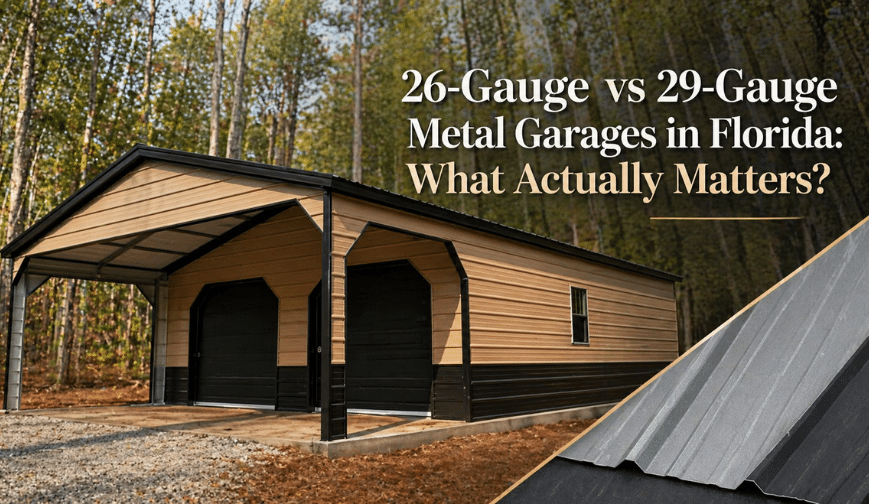
26-Gauge vs. 29-Gauge Metal Garages in Florida
If you’ve started looking into metal garages, you’ve probably seen the term “gauge” come up more than once. In most cases, it comes down to two options: 26 or 29. For a typical residential setup, 29-gauge is common. But in Florida, where wind and weather tend to show up a little stronger, some buyers choose to step up to 26-gauge for added peace of mind.
Key Takeaways
- Metal garage panels usually come in 29-gauge or 26-gauge
- 29-gauge is widely used for standard residential garages
- 26-gauge panels are thicker and feel more rigid
- Florida weather can influence material choices more than other regions
- Wind exposure often plays a bigger role than people expect
- Panel thickness is just one part of the structure’s strength
- Roof design, framing, and anchoring all matter just as much
- Choosing 26-gauge will typically raise the overall price
What’s the Real Difference Between 29 and 26-Gauge Panels
On paper, the difference is just a number. In reality, it’s a small change in thickness that can affect how the panels behave over time. Both are steel. Both protect your garage. But they don’t respond the same way when conditions get a little rough.
29-Gauge Panels
This is what most people end up with, especially for everyday residential use. It’s lighter, easier on the budget, and plenty strong. In areas with some wind protection, it’s usually more than enough.
26-Gauge Panels
26-gauge is a bit thicker and sturdier. They don’t flex as easily, which is why they’re often chosen for more exposed properties.
How That Difference Shows Up
Thicker panels add another layer of durability, especially when paired with the right frame and design.
Why Florida Buyers Choose Thicker Paneling than Buyers in Other States
Florida isn’t exactly gentle on outdoor structures. Between open land, seasonal storms, and steady coastal winds in some areas, metal buildings in Florida tend to face more exposure than they would in many other states.
- Wind tends to be stronger and more consistent in certain regions
- Storm seasons bring sudden gusts and changing conditions
- Some properties don’t have trees or buildings to break the wind
- Local expectations often lean toward more durable setups
- Buyers planning long-term use may prefer thicker materials
For broader storm context, the Saffir-Simpson Hurricane Wind Scale explains how hurricane categories are based on sustained wind speed.
Is 26-Gauge Paneling Automatically Better for Every Florida Metal Garage?
It sounds like an easy answer to go with thicker paneling and call it done. But that’s not always how it plays out. The “better” choice really depends on your specific setup.
When 29-Gauge May Make Sense
If your garage is going up in a more protected spot, 29-gauge is still a solid option. Properties with nearby structures, fencing, or natural wind breaks often don’t need the extra thickness. It keeps costs lower and still performs well for everyday use.
When 26-Gauge is Worth the Upgrade
If your site is wide open or you’re dealing with stronger wind exposure, that added thickness can be a smart move. It’s also worth considering for larger garages where panels span more space and benefit from extra rigidity.
What Matters More than Panel Gauge Alone
It’s easy to zero in on panel thickness, but that’s only one piece of the build. The overall strength comes from how everything works together.
Wind Certification and Engineer-Certified Drawings
- Shows the structure is designed for specific wind conditions
- Often required when applying for permits
- Covers the entire system, not just the panels
Roof Style
- Vertical roofs tend to handle wind and rain more efficiently
- Other styles can still work depending on exposure
- Shape affects how air moves across the structure
Frame Gauge
- A heavier frame adds noticeable strength
- Supports the panels and reduces overall flex
- Plays a big role in long-term stability
Anchoring, Foundation, and Site Prep
- Proper anchors keep the structure grounded
- A level base helps everything sit correctly
- Site prep for a metal building helps avoid long-term issues
Garage Use and Opening Sizes
- Larger door openings can change how wind flows through
- Fully enclosed vs. open designs behave differently
- Intended use helps guide the right setup
Metal Garage Roofing
Panel thickness doesn’t stop at the walls. The same choice applies to the roof. Some buyers stick with standard panels overhead, while others upgrade for a bit more durability. In areas where wind or debris is a concern, thicker roofing panels can help the structure feel more solid overall without changing the design itself.
Florida Permits, Wind Loads, and Common Buyer Mistakes
Metal building permits in Florida are part of the process in most parts of Florida. What trips people up is assuming there’s a single “approved” panel thickness that works everywhere.
In reality, local offices look at the full picture. A common misstep is focusing only on panel gauge. It matters, but it’s not the deciding factor on its own. The full structure is what gets reviewed.
For official code context, review the Florida Building Code and confirm local requirements with your city or county building department before finalizing a design.
Cost Differences Between 29 and 26-Gauge Panels
There’s no way around it. Thicker steel costs more. But panel gauge is only one part of the final number. Size, layout, roof style, and customization all play into the total.
Still, if you move from 29 to 26-gauge, you can expect the price to go up. How much depends on the overall build, but the increase is usually noticeable enough to factor into your decision.
Need help comparing options? Explore financing and Rent-To-Own options, then design your building around your size, roof style, doors, windows, and Florida site conditions.
Why Buy from Direct Metal Structures?
At Direct Metal Structures, we offer a wide range of metal garages designed with Florida conditions in mind. Our buildings use quality steel and are engineered to meet local wind requirements in your area.
With us, you’ll always get:
- Included delivery and installation
- Local knowledge about permitting
- Warranty provided
- Flexible financing and RTO plans
- Dedicated customer service
If you want to explore your options, you can give us a call at 888-277-7950 or try the 3D Designer to create a design on your own.
Conclusion
The choice between 26-gauge and 29-gauge panels usually comes down to context. Both are used across Florida. Both hold up when matched to the right conditions.
Some buyers prefer the added thickness, especially in more exposed areas. Others stick with 29-gauge and focus on other upgrades instead.
In the end, it’s less about picking the “best” gauge and more about building something that fits your space, your needs, and how you plan to use it.
Ready to compare your options? Design Your Building or call 888-277-7950 to talk through your Florida metal garage setup.
