



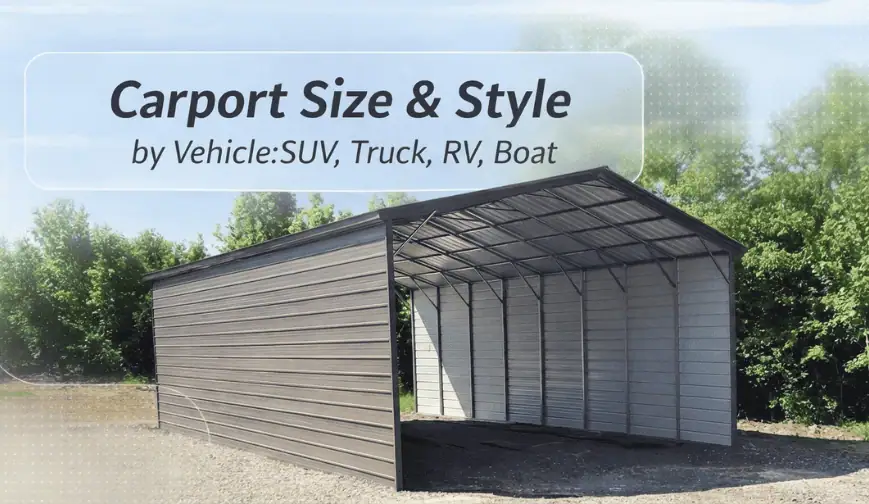
Choosing a Carport Size Based on Your Vehicle
Picking a carport might seem straightforward, but it's easy to misjudge height, width, and roof style when eyeballing it. This guide walks you through sizing based on your actual vehicle, SUV, truck, RV, or boat. Below, we’ll walk you through the many options we offer, so you can find a structure that’s the ideal fit before you buy.
Key Takeaways
- Width, mirrors, and door swing often matter more than body length
- Roof racks, antennas, and AC units can add inches to height
- Boats and RVs need full trailer measurements, not just the vehicle
- Vertical roofs help with taller vehicles and heavy weather
- Adding a little extra space now saves headaches later
Why This Matters for Real Buyers
Most people know what they want to park, but don’t realize how tricky clearance can get. Two SUVs of similar size? One might barely fit if it has a roof rack. Crew-cab trucks? Their mirrors can stick out way farther than you expect.
It’s all about fit, breathing room, and future-proofing. You want to park, get in and out, and maybe tow something without all the squeezing or guessing.
Measure Before You Shop
Grab a tape measure. You’ll thank yourself later.
- Widest point first: Mirrors included. Don’t eyeball it.
- Height check: From the ground to the tallest thing on top, including rack, AC, and antenna.
- Towing? Include trailer width, tongue, and anything that sticks up.
- Extra room: A few inches on every side is worth it. Vehicles change, and so do plans. You’ll be glad for the extra space in the future.
Recommended Carport Fit by Vehicle Type
SUVs and Crossovers
SUVs can seem simple, but mirrors and doors can matter as much as height. Roof racks or cargo boxes add a few inches, too. The trick is giving yourself enough room to open doors and unload gear comfortably. Choosing an option that’s a touch wider than the vehicle is usually enough to do the job.
Full-Size Trucks and Crew Cabs
Big trucks need breathing space. Mirrors stick out, and crew cabs take more room to maneuver. Sometimes a 10-foot clearance is fine, but as trucks get taller or wider, giving extra width and height makes life easier, especially when backing in or towing.
RVs, Campers, and Motorhomes
RVs are a different animal. Most need taller vertical roofs and longer footprints, like 12x40 to 18x50. Rooftop ACs, antennas, solar panels, and ladders all add height to this number. Buy tight, and you'll regret it the first time you park.
Boats on Trailers
Boats on trailers aren’t just about the hull. You’ll need to choose an option that accounts for towers, biminis, guide posts, and the angle in which you’ll load and unload.
Quick Comparison Chart
| Vehicle Type | Measure | Clearance Risk | Roof Fit | Size Up When |
|---|---|---|---|---|
| SUVs & Crossovers | Mirrors, roof accessories | Door swing | Regular / A-frame | Cargo racks or boxes |
| Full-Size Trucks | Mirrors, cab height | Side clearance | A-frame / Vertical | Crew cabs, towing mirrors |
| RVs & Campers | Roof accessories, ladder | AC, vents | Vertical | Bigger RVs later |
| Boats on Trailers | Trailer, tower, bimini | Backing in | A-frame / Vertical | Wide or tall trailers |
Which Roof Style Makes the Most Sense?
Regular Roof
Regular roofs are simple, budget-friendly, and work for lighter-duty vehicles or mild weather. Great if you just need basic coverage without frills.
A-Frame / Boxed-Eave Roof
This option sheds water better than regular roofs, and still doesn’t go overboard. Good for most trucks and SUVs with minimal roof accessories.
Vertical Roof
Vertical roofs are best for tall vehicles, RVs, or places with heavy snow/rain. Panels run straight down, so water slides off easily. Extra height and durability make this the go-to for long-term protection.
Common Clearance Mistakes Buyers Make
Forgetting mirrors when measuring
It’s easy to focus on the vehicle’s body and overlook mirrors, but they often stick out several inches beyond the doors.
Ignoring roof racks, antennas, ladders
Rooftop gear can add unexpected height and bulk. Cargo racks, antennas, solar panels, or ladders may push your vehicle above the roofline you measured.
Planning only for the current vehicle
Your car today might not be the one you drive five years from now. Buying a carport that fits exactly now leaves zero wiggle room for larger SUVs, trucks, or RVs later.
Skipping turning radius and approach angle
Even if your vehicle fits the footprint, tight turns can make parking tricky. A straight measurement doesn’t account for how much room you need to swing in or back out without scraping the frame.
Underestimating side space for doors
Trying to squeeze out of a car or unload gear in a narrow gap is frustrating. Aim for extra side room so doors open fully and passengers can move comfortably.
Picking roof style just because it looks good
A roof can look stylish, but if it doesn’t handle rain, snow, or tall vehicles, it won’t serve your needs.
Customization Options That Improve Fit
One of the best things about our metal buildings is their customizability. You’ll have complete control over almost every facet of your structure, allowing you to come up with a design that fits your property and your vehicles. Some of the custom options include:
- Side panels for weather protection
- Enclosed ends to block wind or rain
- Extended panels for extra coverage
- Storage or utility add-ons
- Roof style upgrades
- Certification upgrades
Why Buy From Direct Metal Structures?
We’re proud to be a leading supplier of high-quality metal buildings big and small. Our structures are built with premium steel and engineered to take on any region of the US.
With us, you’ll always get:
- Certified metal structures
- Included delivery and installation
- Permit-ready designs
- Local code knowledge
- Flexible financing and RTO
- Leading warranties
Ready to design your dream structure? Call 888-277-7950 and talk to our experts. Or use our [3D Designer] to start creating a building on your own.
The Final Word
The best carport for you isn’t necessarily the standard size. It’s the one that actually fits your vehicle, your property, and your lifestyle. Measure carefully, plan for clearance, and think ahead. Your building and your future plans will thank you.
FAQs
1.
What size carport do I need for an SUV?
Answer: Check width, including mirrors and any roof accessories. Standard heights usually work.
2.
What height works best for an RV?
Answer: Vertical roofs with extra height are safest for AC units, ladders, and future upgrades.
3.
Do boats need extra width?
Answer: Yes, trailers and towers add width. Measure the full setup, not just the hull.
4.
Is a vertical roof worth it for taller vehicles?
Answer: Generally, yes. Extra runoff and clearance help with trucks and RVs.
5.
Can I add side panels or enclosed ends later?
Answer: Many carports allow that, depending on the setup.
6.
Do I need a certified carport or permit?
Answer: In many cases, yes. Check with local building authorities.
