

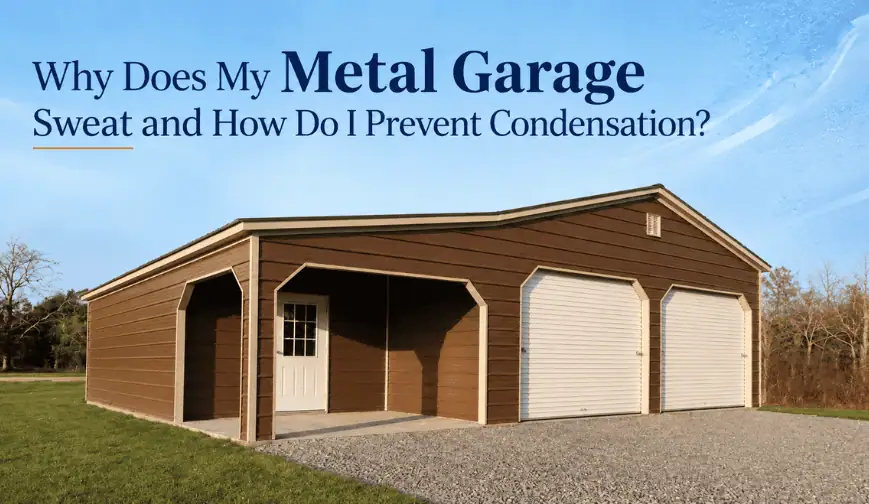
Why Does My Metal Garage Sweat?
Unwanted condensation, also known as ‘sweating,’ is a symptom that may show up in some uninsulated metal garages. It usually starts as water droplets on roof panels, walls, and vehicles, and can cause quite a few headaches if not mitigated.
But while metal garage sweat might seem alarming at first, it can be prevented with the right tools and techniques.
This guide explains why condensation happens and how to stop it permanently with the right insulation, ventilation, and moisture-control solutions.
Planning a garage that stays protected year-round? Compare one-car metal garages, two-car metal garages, or use the 3D Estimator to start visualizing your building.
Key Highlights
- Metal garage condensation occurs when warm, moist air comes into contact with cool steel panels.
- Sudden temperature swings are among the biggest triggers of sweating in metal buildings.
- Uninsulated garages are more likely to develop moisture problems.
- Dirt floors and exposed ground can release moisture into the structure.
- Poor airflow traps humidity inside the garage and worsens condensation.
- Vapor barriers help prevent moisture from reaching metal surfaces.
- Spray foam insulation is one of the most effective long-term solutions for preventing condensation.
- Roof style can influence how much moisture builds up around a metal garage.
What Is Condensation and Why Does it Happen in Metal Garages?
Condensation forms when warm, moisture-filled air comes into contact with a colder surface. In metal garages, the steel roof and wall panels cool down quickly during temperature changes, making them a prime surface for water droplets to form.
Dew Point and Temperature Changes
The dew point is the temperature at which air can no longer hold moisture, forcing water vapor to turn into liquid. When warm indoor air touches cold metal panels, condensation develops rapidly. This is why many garage owners notice sweating during early mornings or overnight temperature drops.
Why Metal Buildings Are More Susceptible
Metal transfers temperature faster compared to wood or traditional building materials. Steel panels cool down and heat up quickly, creating ideal conditions for moisture formation whenever humidity levels rise inside the building.
Seasonal and Weather Triggers
Cold weather followed by warmer, humid air often creates condensation problems inside garages. Rainy seasons, snow melt, humid climates, and dramatic temperature swings all increase the likelihood of sweating inside a metal structure.
Everyday Moisture Sources
Vehicles, wet equipment, lawn tools, snow-covered tires, and even people walking inside the building add moisture to the air. Without proper airflow or insulation, that humidity becomes trapped and settles onto cooler metal surfaces.
Need enclosed space for wet vehicles, tools, and equipment? View the 24x30 Fully Enclosed Two Car Garage to see a practical enclosed garage layout for vehicle protection and storage.
The Five Most Common Causes of Metal Garage Condensation
Many owners assume condensation means something is wrong with the building itself, but most sweating problems come from environmental conditions and missing moisture-control systems. Understanding the root cause is the first step toward permanently solving the issue.
1. Lack of Insulation
Uninsulated metal panels allow warm indoor air to hit cold steel surfaces directly. Without insulation separating those temperature differences, condensation forms quickly on ceilings and walls during weather changes.
2. Poor Ventilation
Moisture becomes trapped inside garages when airflow is limited. Without ridge vents, gable vents, windows, or fans, humid air lingers inside the structure and increases the chance of sweating.
3. Bare Ground or Dirt Floor
Exposed soil releases moisture into the air through evaporation, which increases humidity inside garages with dirt floors.
4. Seasonal Temperature Swings
Rapid weather shifts create ideal conditions for sweating. Warm daytime air followed by cold nighttime temperatures often causes condensation to appear suddenly on roof panels and walls.
5. Improper or Missing Vapor Barrier
A vapor barrier helps stop moisture from moving through walls, floors, and roof systems. Without one, humidity can reach the metal panels and create condensation issues.
How to Stop Metal Garage Condensation
The good news is that condensation problems are usually preventable with the right combination of insulation, airflow, and moisture control. Some solutions are designed for permanent prevention, while others help manage humidity in the short term until a more complete upgrade can be installed.
1. Install Closed-Cell Spray Foam Insulation
Closed-cell spray foam creates an air-tight insulation layer directly against the metal panels. It helps regulate temperature differences while also acting as a moisture barrier, making it one of the most effective long-term condensation solutions available.
2. Add Batt Insulation with a Facing Vapor Barrier
Batt insulation paired with a vapor-facing barrier helps separate warm indoor air from cold steel panels. This option is often more affordable than spray foam while still significantly reducing sweating problems.
3. Improve Ventilation
Adding ridge vents, gable vents, exhaust fans, or windows helps humid air escape before condensation forms.
4. Install a Concrete Slab or Ground Vapor Barrier
Concrete slabs with proper vapor barriers dramatically reduce ground moisture entering the structure. If a slab is not possible, heavy-duty ground plastic barriers can still help limit humidity rising from exposed soil.
5. Use a Dehumidifier for Short-term Control
Dehumidifiers help remove moisture from the air and can temporarily reduce active condensation. While they are not always a permanent fix, they can help control humidity until insulation or ventilation upgrades are completed.
Building from the ground up? Review DMS delivery and installation guidance before installation day, or compare a 20x30 Metal Garage if you need a compact enclosed garage layout.
Does Roof Style Affect Condensation in a Metal Garage?
Roof design can influence how moisture behaves both inside and outside your structure. Vertical roof systems are often preferred for moisture management because they shed water and debris more efficiently than horizontal roof designs.
Vertical roof panels run up and down, allowing water and debris to shed rather than pool. This reduces exterior moisture buildup and minimizes standing water exposure on the roof surface.
Vertical roof panels also pair best with insulation systems because the hat channel framing creates natural spacing for batt insulation installation. This often makes insulating the structure easier and more effective.
Regular and A-Frame horizontal roofs can collect debris and moisture more easily because the panels run sideways. Leaves, dirt, and standing water can increase exterior moisture pressure over time.
You can learn more about roof configurations in the Direct Metal Structures roof styles blog.
Considering a vertical roof garage? View the 24x30 Two Car Metal Garage as a product-page example, or use the metal building project checklist to plan roof style, doors, windows, insulation, and site prep together.
Is Condensation in a Metal Garage Dangerous?
A small amount of seasonal condensation may seem harmless initially, but long-term moisture problems can create serious damage inside a metal garage. Ignoring ongoing sweating problems usually leads to:
Rust and Corrosion
Constant moisture exposure accelerates rust formation on steel panels, fasteners, tools, and vehicles. Over time, corrosion can weaken metal components and shorten the lifespan of the structure.
Mold and Mildew Growth
Condensation creates damp surfaces where mold and mildew can develop, especially in poorly ventilated garages. Mold growth may damage stored belongings and create unpleasant odors inside the building.
Slipping Hazards
Water collecting on concrete floors creates slippery conditions that increase the risk of falls. This becomes especially dangerous around vehicles, tools, and workshop areas.
Final Thoughts
Metal garage condensation is a common issue, but it is also one of the easiest problems to prevent when the building is properly designed from the start. Most sweating problems come down to moisture, temperature changes, and trapped humidity working together inside an unprotected structure.
The right combination of insulation, ventilation, vapor barriers, and roof design can make a major difference in keeping your garage dry year-round. Whether you are storing vehicles, tools, equipment, or creating a workshop space, taking steps to control condensation helps protect both your building and everything inside it.
Need more room for vehicles, tools, or a workshop setup? Compare a larger enclosed layout like the 24x50 Two Car Garage with Lean-To, then explore financing options if you want flexible buying paths.
Why Buy from Direct Metal Structures?
At Direct Metal Structures, we help buyers choose metal garages designed for their climate, property conditions, and long-term storage needs. Whether you need a compact garage for vehicle protection or a large insulated workshop,our certified metal garages are built to handle a wide range of climate conditions..
When you work with us, you get:
- Included delivery and installation
- Local knowledge of permitting requirements
- Certified designs for your regional climate
- Dedicated customer support throughout
- Custom sizing and configuration options
- Multiple roof style choices
- Financing and RTO options for qualified buyers
- And more!
Ready to design your garage? Design Your Building, review Rent-To-Own options, or call 888-277-7950 to speak with Direct Metal Structures.
Metal Garage Moisture Problems: Buyer Questions Answered
1.
Why is my metal garage dripping from the ceiling?
Answer: This usually happens when warm, humid air comes into contact with cold metal roof panels, causing condensation. Poor ventilation and missing insulation are common causes.
2.
What is the best insulation to prevent condensation in a metal garage?
Answer: Closed-cell spray foam is often considered the most effective option because it provides both insulation and moisture resistance in one system.
3.
Do I need a vapor barrier in a metal garage?
Answer: Yes. Vapor barriers help prevent moisture from reaching the metal panels and significantly reduce the risk of condensation inside the structure.
4.
Will a concrete slab stop condensation in a metal garage?
Answer: A concrete slab with a proper vapor barrier underneath can noticeably reduce ground moisture entering the building.
5.
Does metal garage condensation cause rust?
Answer: Yes. Repeated exposure to moisture can eventually lead to rust and corrosion on metal panels, tools, fasteners, and vehicles stored in the garage.
6.
Can I add insulation to a metal garage after it’s installed?
Answer: Yes. Many insulation systems, including spray foam and batt insulation, can be added to existing metal garages after installation.
