

Pole Barns and Metal Buildings in Texas
A lot of Texas buyers don’t set out to compare pole barns and metal buildings in Texas; it just happens once quotes start coming in. One contractor suggests wood posts. Another sends over a steel package. Prices may land in the same ballpark, which makes the choice feel smaller than it really is.
But it isn’t just a price decision. Permits, long-term upkeep, and how the structure holds up in Texas weather all start to matter pretty quickly. This guide walks through both options in plain terms so you can sort it out before committing.
Key Highlights
- Pole barns usually come in cheaper at the start
- Steel buildings are often engineered for local wind demands
- Commercial permits tend to favor certified structures
- Pole barns are widely used in rural areas across Texas
- Metal buildings generally hold up longer with fewer issues
- Expanding a steel structure is usually easier later on
- Roof style can impact drainage and wear over time
- Long-term value often leans toward all-metal buildings
What is a Pole Barn?
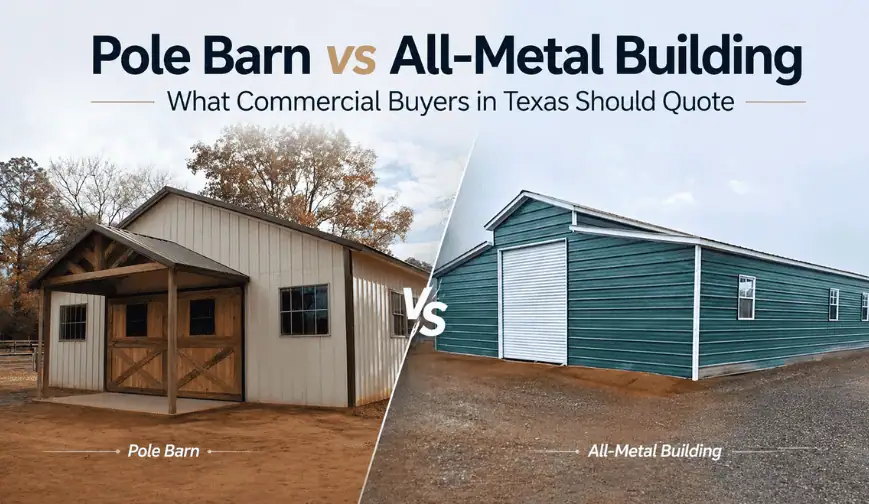
A pole barn is built by placing large wooden posts directly into the ground, then tying everything together with framing and panels. You’ll see them all over rural parts of Texas, in farm storage, equipment covers, and small workspaces. They’re quick to build and are made to last. For commercial use, though, they often need added engineering to meet code requirements.
What is a Metal Building?
A metal building is based on a steel frame that’s anchored to a foundation, then finished with metal panels and roofing. These are usually designed to meet wind and load requirements for the area, which matters in many parts of Texas. Buyers can choose from regular, A-frame, or vertical roof styles, along with layout options that match the local weather patterns and how the building will actually be used.
Pole Barns Vs. All-Metal Buildings
At a glance, both can cover space and protect what’s inside. The difference tends to show up later in terms of how they age, how they pass inspection, and how much effort they take to maintain.
Construction and Materials
Pole Barns: Built around wood posts set in the ground. That keeps things simple at the start. Over time, though, soil and moisture can start to wear on those posts. It doesn’t happen overnight, but it’s something owners end up dealing with.
Metal Buildings: Steel framing sits on a foundation instead of in the ground. That setup avoids a lot of the issues tied to moisture. The structure tends to stay more stable as the years go on.
Cost Upfront Vs. Long-Term
Pole Barns: Lower upfront pricing is what pulls most people in. But if upgrades are needed for permits or repairs later, that initial savings can shrink.
Metal Buildings: Often cost more at the beginning. After that, costs are usually more predictable, with fewer repairs popping up.
Wind Load and Weather Performance
Pole Barns: Can handle normal conditions, but stronger winds may require added reinforcement. In open Texas areas, that can become a factor.
Metal Buildings: Typically designed around wind ratings from the start. That extra strength becomes noticeable when the weather turns rough. For coastal or wind-exposed areas, buyers should also review Texas windstorm eligibility requirements when insurance or certification may be involved.
Permitting for Commercial Use
Pole Barns: This is where some projects slow down. Many standard builds aren’t set up for commercial approval without changes.
Metal Buildings: Certified plans are common, which tends to make permitting more straightforward. Texas commercial buyers can also review Texas industrialized building code requirements for broader code context.
Customization and Expansion
Pole Barns: You can customize them, but expanding later can feel a bit pieced together, depending on the original build.
Metal Buildings: Expansion is usually more planned. The framing system makes it easier to add on without reworking everything.
Which Should You Choose
If the goal is basic storage or agricultural use, a pole barn might do the job just fine.
If you’re planning a commercial space, dealing with permits, or thinking long-term, most buyers end up leaning toward metal.
Why Texas Commercial Buyers Choose Direct Metal Structures
At Direct Metal Structures, we’re proud to be a leading provider of commercial metal buildings in Texas. Our structures are built with high-quality steel and designed to meet local wind and snow loads, so no matter where you call home, you’ll have a building ready to put in the work.
With us, you'll always get:
- Included delivery and installation
- Certified building designs engineered for your climate
- Structures ready for permitting
- Strong warranty coverage
If you want to see what your commercial building could look like, give us a call at 888-277-7950 or try our 3D Designer tool and build it out your way.
Ready to compare your options? Design Your Building, explore financing options, or review rent-to-own details before you request a Texas-ready metal building quote.
Frequently Asked Questions
1.
Is a pole barn cheaper than a metal building in Texas?
Answer: At the start, usually yes. Over time, the gap can close depending on repairs or upgrades.
2.
Can I use a pole barn for commercial use in Texas?
Answer: Sometimes, but it often requires added engineering to meet local codes.
3.
What wind load rating do I need for a metal building in Texas?
Answer: It depends on your location, but higher ratings are common due to storm exposure.
4.
Does Direct Metal Structures deliver and install in Texas?
Answer: Yes, delivery and installation are included.
5.
What is the best roof style for a commercial metal building in Texas?
Answer: Vertical roofs are often preferred for durability and water runoff.
6.
Can I finance a commercial metal building in Texas?
Answer: Yes, many buyers choose financing depending on the project.
Conclusion
At first glance, pole barns and metal buildings can seem pretty similar. The differences tend to show up later during permitting, after a few seasons of weather, or when it’s time to expand. For commercial use in Texas, those details matter. Taking a closer look now can help avoid bigger decisions later on.
