

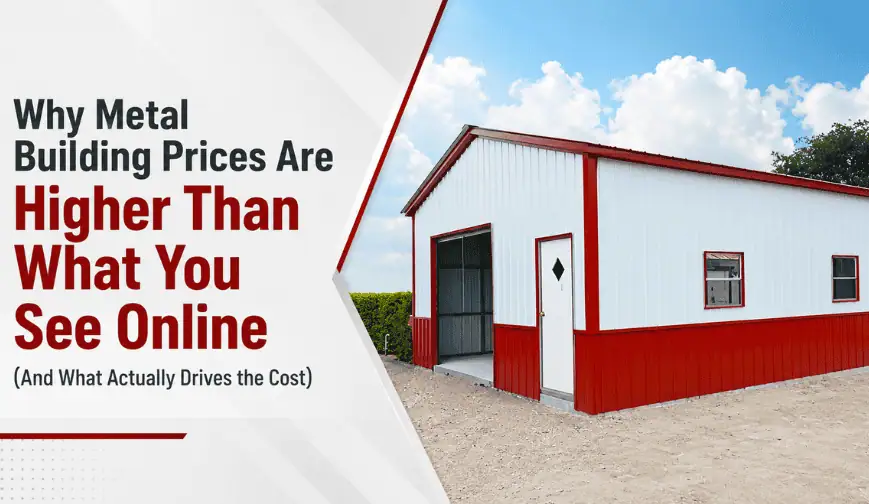
When researching a metal building, it’s easy to see a starting price listed online and assume it’s the final project cost. However, that figure is usually based on a standard configuration that doesn’t always include every option needed for your specific project.
Factors like engineering requirements, customization, delivery, and local conditions all play a role in the total metal building cost.
This guide explains what actually influences metal building pricing so you can better understand your quote and make a more informed buying decision.
Ready for pricing based on your actual building? Use the 3D Estimator or call 888-277-7950 to discuss your size, location, roof style, and customization needs.
Key Highlights
- Online metal building prices are typically starting points based on standard configurations.
- Local requirements like wind zones and snow loads can affect structural specifications and pricing.
- Delivery distance and regional labor rates influence the final cost of installation.
- Roof style, frame gauge, and customization options can change the overall project price.
- Getting an accurate quote starts with knowing your location, building size, and intended use.
- DMS provides customized metal building solutions that are designed around your project needs.
- Understanding cost drivers helps you compare quotes with greater confidence.
What Starting Price Really Means
A starting price is designed to give buyers an idea of what a basic metal building may cost. It usually reflects a standard size, standard materials, and a basic configuration. Once a building is customized for your property, location, and requirements, that price can change.
The following factors are some of the biggest contributors to the difference between a starting price and the actual project cost.
Cost Driver #1: Wind Zone and Snow Load Requirements
Every location has different weather conditions and building requirements. Areas with higher wind speeds, heavy snowfall, or stricter local codes may require additional engineering, upgraded framing, or specific building components.
For more planning context, review DMS’s guide on snow loads and building codes or compare 12-gauge vs. 14-gauge metal framing before finalizing your structure.
Cost Driver #2: Geographic Labor and Delivery Rates
Where your building is installed can influence the overall cost. Labor rates vary depending on the local market, and delivery expenses may increase when a structure must travel farther from the manufacturing location.
DMS includes delivery and installation on many product and category pages, but the details of your project still depend on location, access, site readiness, and the building configuration. Learn more about the delivery and installation process.
Cost Driver #3: Sales Tax and Regional Fees
Sales tax and local fees can vary significantly by state and county. Depending on your location and how your project is structured, these costs may affect the final amount shown on your quote.
Because these costs are location-based, the best next step is to request a quote based on your ZIP code and project details.
Cost Driver #4: Roof Style, Frame Gauge, and Customization Upgrades
The building specifications you choose have a direct impact on pricing. Roof style, frame strength, and added features all affect the final cost.
If you are still comparing roof styles, read DMS’s guide to Regular, A-Frame, and Vertical roofs. Vertical roofs are often chosen for tougher weather because the panel layout helps with drainage, debris, and snow shedding.
Roof style affects both performance and price. Call 888-277-7950 and DMS can help match your roof style to your local weather, building size, and permit needs.
How to Get a Quote That Matches What You’re Actually Building
The best way to receive an accurate metal building quote is to provide details that reflect what you’re actually building. A basic online price can be helpful for planning, but a customized quote gives you a much clearer picture of your expected investment.
Before requesting your quote, make sure you know:
Your County and State
Your location helps determine important requirements like wind ratings, snow loads, and engineering needs. DMS can help look up these requirements, or you can confirm them with your local building department.
Whether You Need a Permit
Permit requirements vary by location. If a permit is required, engineer-certified framing and documentation may be needed to support your application. DMS’s guide to metal building permits and regulations explains what buyers should review before building.
Your Exact Building Footprint
Know the width, length, and leg height you need. A building that is 30’ wide, 40’ long, and 12’ tall will have different pricing than a smaller or taller structure.
If you are comparing a larger footprint, DMS’s 30x50 metal building cost guide is a useful example of how size, site prep, customization, and other project details affect total cost.
Your Preferred Roof Style
Roof style affects both appearance and performance. Vertical roofing is often recommended for certified builds and areas with heavier weather conditions because of its design advantages.
Your Customizations
Include any features you want from the beginning, such as:
- Number of roll-up doors
- Walk-in doors
- Windows
- Insulation
- Increased leg height
- Additional design options
The more complete your project details are, the more accurate your quote will be. Contact Direct Metal Structures today at 888-277-7950 to discuss your building plans and get pricing based on what you’re actually looking to build.
Why Choose Direct Metal Structures for Your Metal Building Project
Direct Metal Structures proudly offers a wide selection of custom steel buildings designed for residential, commercial, and agricultural applications. Our structures are engineered for your climate, customized to fit your next project, and built to provide reliable performance for decades.
When you work with Direct Metal Structures, you get:
- A wide range of metal building styles and sizes
- Included delivery and installation
- Customizable designs for your specific needs
- Engineered structures built around local building code requirements
- Quality materials designed for long-term durability
- Support throughout the planning and ordering process
- A team that helps you understand your available options
Whether you’re planning a workshop, garage, storage building, agricultural structure, or another custom project, DMS makes it easier to design the right solution. Call us today at 888-277-7950 for a FREE quote or use our 3D Designer to customize your structure online.
Explore popular building categories: Metal Carports | Metal Garages | Metal Barns | Metal RV Covers
Conclusion
Metal building pricing can vary for many reasons, and the first number you see online is usually a starting point rather than a final project cost. Factors like location, engineering requirements, building specifications, and custom features all help determine the price of your completed structure.
By understanding what influences pricing, you can compare options more effectively and choose a building that fits your property and budget.
Need help comparing options? Use Design Your Building, review financing options, or call 888-277-7950 for help building a quote around your real project details.
Cost Drivers at a Glance
| Cost Driver | What Causes It | Impact Level | How to Know If It Applies |
|---|---|---|---|
| Wind/Snow Engineering | State and county structural codes may require certified framing for higher-load zones | HIGH | Northeast, Midwest, Mountain West, California — contact DMS or check with your local building department |
| Geographic Labor Rate | Installation labor costs vary based on regional market conditions | MED - HIGH | Northeast, Pacific Coast, and mountain states are typically more affected compared to lower-cost regional markets |
| Delivery Distance | Longer transportation distances can increase delivery costs depending on manufacturing location | MEDIUM | California, Pacific Northwest, and New England projects may have higher transportation considerations |
| Sales Tax | State and local taxes on materials and installation vary by jurisdiction | LOW - MED | Most states apply some form of sales tax, but rates vary by location |
| Roof Style Upgrade | Vertical roofs generally cost more than standard regular or A-frame boxed eave styles | LOW - MED | Commonly selected for certified builds and areas with heavier rain or snow conditions |
| Frame Gauge Upgrade | 12-gauge framing may be required for higher load ratings compared to standard 14-gauge framing | LOW - MED | Applies when engineering requirements or permit standards call for stronger framing |
| Customization Add-ons | Additional doors, windows, insulation, taller legs, lean-tos, and other options increase the base configuration price | VARIES | Any upgrade beyond the standard starting configuration can affect the final quote |
Your Questions, Answered
1.
Why is the metal building quote I received higher than the price on the website?
Answer: Online prices typically represent a starting configuration. Your final quote may change based on your location, building size, required engineering, delivery, roof style, and customization options.
2.
What is a "starting price" for a metal building?
Answer: A starting price is the estimated cost of a standard building configuration before adding location-specific requirements, upgrades, or custom features.
3.
Does living in a state with heavy snow make a metal building more expensive?
Answer: It can. Areas with higher snow loads may require additional engineering, stronger framing, or other structural upgrades to meet local requirements.
4.
Does the roof style I choose affect the price of a metal building?
Answer: Yes. Different roof styles have different material and construction requirements, which can affect the final price of your structure.
5.
Can I finance a metal building if my quote is higher than I expected?
Answer: Yes. We offer a wide range of financing and RTO plans for those working on a budget. Contact DMS to discuss available options for your building.
6.
How do I know if my area requires engineer-certified framing for a metal building?
Answer: Requirements will depend on your county, state, building size, and intended use. You can contact your local building department or speak with DMS to better understand what your project may require.
