


Buying an RV cover starts with one simple question: how tall does it actually need to be? While your RV's class gives you a good starting point, it's your vehicle's exterior height that really determines the right fit.
This guide explains how wall height, leg height, and peak clearance work together to fit your current rig and support your future plans.
Key Takeaways
- Your RV's maximum exterior height is the most important measurement when selecting an RV cover.
- Wall height, leg height, and peak height describe different parts of the structure and should not be used interchangeably.
- Rooftop equipment such as air conditioners, solar panels, antennas, and satellite systems can significantly affect required clearance.
- Different RV classes typically require different amounts of vertical clearance.
- Peak height alone does not determine how much usable clearance is available beneath the cover.
- Future vehicle upgrades may be worth considering when choosing your RV cover height.
- Direct Metal Structures offers customizable RV covers engineered for your area's required wind and snow loads.
Planning an RV shelter? Browse metal RV covers sized for Class A, B, C, travel trailers, and fifth wheels. For more help understanding roof geometry, see the Regular vs. A-Frame vs. Vertical Roof guide.
Wall Height vs. Peak Height: What Do RV Cover Measurements Actually Mean?
Several different measurements are used to describe the height of metal buildings, and each serves a different purpose. Understanding those terms helps you compare these buildings more accurately and choose a cover that offers the right amount of clearance for your vehicle.
- Wall Height
Wall height refers to the vertical distance from the ground to the top of the sidewall where the roof begins. This is one of the most important dimensions because it largely determines the usable side clearance available when parking your RV beneath the structure. - Leg Height
On many open RV covers and carports, leg height is used interchangeably with wall height. It represents the height of the supporting columns before the roof system begins and is often the primary measurement buyers use when comparing different RV cover options. - Peak Height
Peak height is the measurement from the ground to the highest point of the roof at its center. While this number is larger than the wall or leg height, it only represents the roof's highest point. Because the roof slopes downward toward the sides, peak height should not be used as the primary measurement when determining vehicle clearance.
Which Height Matters Most When Parking an RV Under an RV Cover?
Although all three measurements are useful, the most important consideration is whether your RV can comfortably clear the structure throughout the parking process. Looking beyond the published dimensions and accounting for the vehicle's tallest components helps prevent issues. Check your:
- RV's Maximum Exterior Height
Start with the manufacturer's published exterior height and verify that it reflects your specific configuration. This measurement provides the foundation for selecting an appropriate wall height. - Rooftop Air Conditioners
Roof-mounted air conditioning units are often the tallest component on an RV. Be sure to verify whether the published vehicle height already includes these units. - Satellite Dishes and Antennas
Satellite equipment, antennas, and communication devices can extend above the roofline. Even relatively small accessories may influence the amount of clearance your cover requires. - Solar Panels or Roof Racks
Solar systems, storage racks, cargo platforms, and similar additions can increase the vehicle's overall height beyond factory specifications. - Roof-Mounted Accessories
Plumbing vents, skylights, ladder extensions, and other rooftop equipment all contribute to your RV's total exterior height. Measuring the highest fixed component provides the most accurate reference. - Future Upgrades
If you expect to replace your current RV or add rooftop equipment later, it may be worthwhile to discuss those plans before finalizing your building. Planning ahead can help guarantee the structure continues to meet your needs over time.
RV Cover Height by Camper Class
| RV Type | Typical Exterior Height | Suggested Starting Wall Height | Approx. Peak Height | What Can Add Height? | What You Should Verify |
|---|---|---|---|---|---|
| Class B Camper Van | Approximately 9'-10' | 10' wall | Approximately 11'-12' peak | Roof A/C, roof racks, solar panels, antennas | Manufacturer's published exterior height |
| Class C Motorhome | Approximately 10'-11.5' | 12' wall | Approximately 13'-14' peak | Roof A/C, cab-over section, satellite equipment | Maximum exterior height with accessories |
| Class A Motorhome | Approximately 12'-13.5' | 14' wall | Approximately 15'-16' peak | Multiple A/C units, satellite dome, solar equipment | Actual RV height plus desired parking clearance |
| Travel Trailer | Approximately 10'-11.5' | 12' wall | Approximately 13'-14' peak | Rooftop A/C, vents, solar panels | Height with all rooftop equipment installed |
| Fifth Wheel / Large Toy Hauler | Approximately 12'-13.5' | 14' wall | Approximately 15'-16' peak | Dual A/C units, roof accessories, solar equipment | Maximum loaded exterior height |
- Class B Camper Vans
Class B camper vans are generally among the lower-profile recreational vehicles available today. Even so, rooftop accessories such as storage racks, solar panels, and air conditioning units should always be included when determining overall height. - Class C Motorhomes
Class C motorhomes typically require more vertical clearance due to their cab-over sleeping area and taller overall design. Measuring the complete exterior height, including rooftop equipment, helps guarantee the cover is appropriately sized. - Class A Motorhomes
Class A motorhomes are often the tallest motorized RVs on the road and frequently include multiple rooftop accessories. Selecting an RV cover based on the vehicle's maximum exterior height can make parking and everyday use easier. - Travel Trailers
Travel trailer heights vary considerably depending on the manufacturer and floor plan. Because rooftop air conditioners are commonly installed, it's important to verify whether published dimensions already account for these components. - Fifth Wheels and Large Toy Haulers
Fifth wheels and large toy haulers are frequently among the tallest towable RVs available. Buyers should confirm the fully equipped exterior height before finalizing their design.
Compare real RV cover heights
Three DMS covers at 12', 13' and 14' wall height. Match the wall height to your RV's measured height plus your clearance allowance — not to the peak.
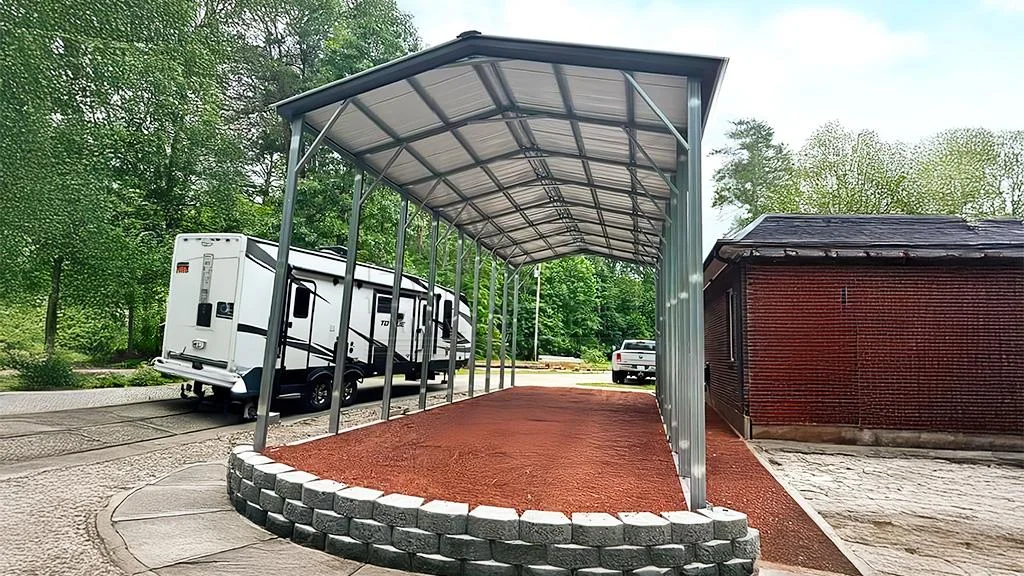
SKU #DMS64
18x40 RV Cover
An 18' width gives room to walk the length of the rig with the awning out, rather than squeezing past a wall.
Wall height12'Usable side clearance, measured to the eave.
Typically suits
Class C motorhomes and travel trailers in the 10'–11.5' range, once rooftop A/C is counted.
Specifications as shown Width x Length 18' x 40' Sides Open, panels optional Roof type Vertical Frame gauge 14 Sheet metal gauge 29 gauge steel
- Delivery & installation included
- Financing and Rent-to-Own available
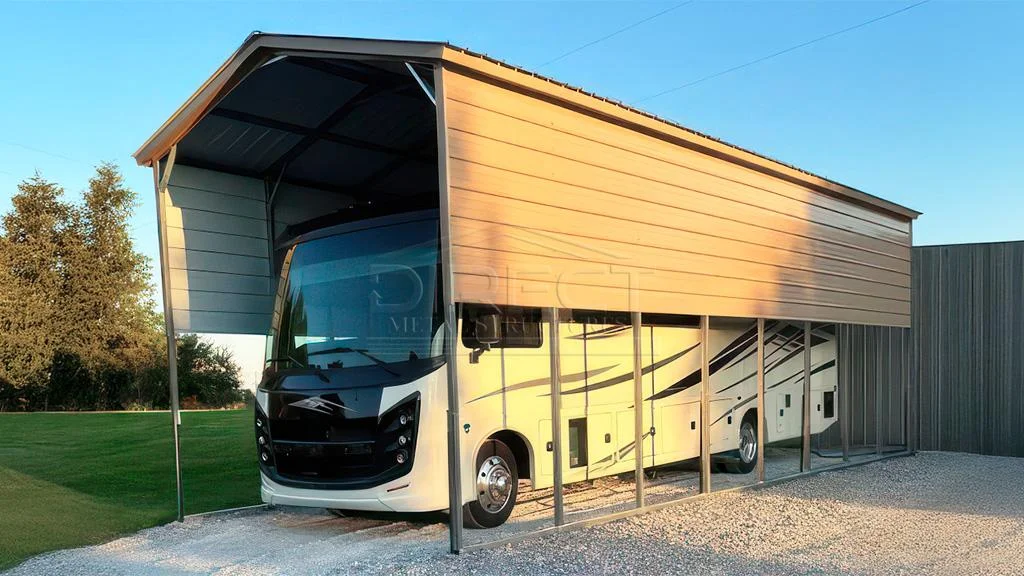
SKU #DMS66
12x40 RV Cover
A narrow 12' footprint that still buys an extra foot of clearance — the option when the lot is tight but the rig is tall.
Wall height13'Usable side clearance, measured to the eave.
Typically suits
Travel trailers and Class C rigs carrying solar, racks or a satellite dome above the factory height.
Specifications as shown Width x Length 12' x 40' Sides Open ends, panels optional Roof type Vertical Frame gauge 14 Sheet metal gauge 29 gauge steel
- Delivery & installation included
- Financing and Rent-to-Own available
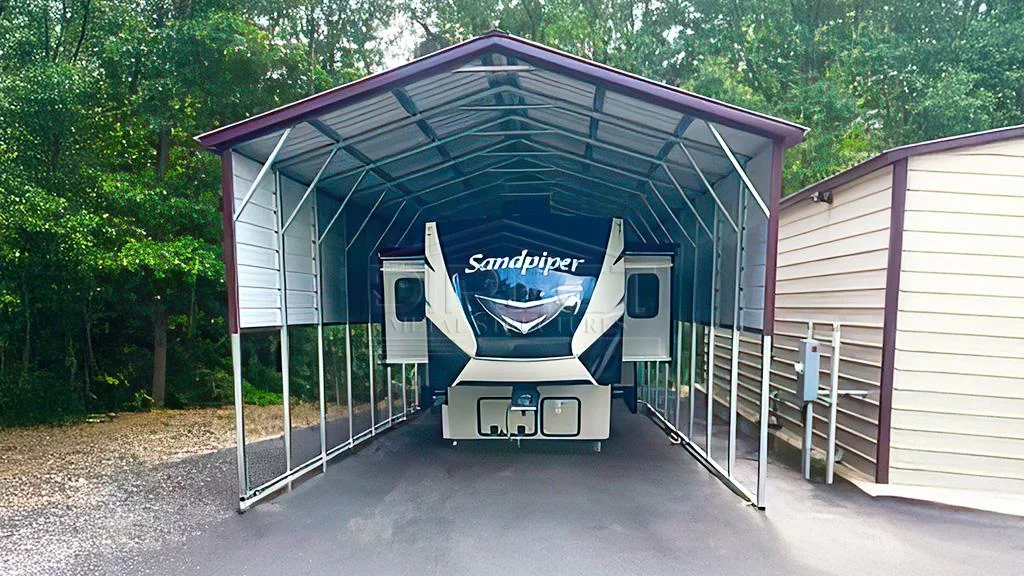
SKU #DMS78
18x50 Metal RV Cover
The tallest and longest of the three — 50' of length covers a big rig plus the tow vehicle or hitch extension behind it.
Wall height14'Usable side clearance, measured to the eave.
Typically suits
Class A motorhomes and fifth wheels in the 12'–13.5' range with dual A/C units.
Specifications as shown Width x Length 18' x 50' Sides Open ends, panels optional Roof type Vertical Frame gauge 14 Sheet metal gauge 29 gauge steel
- Delivery & installation included
- Financing and Rent-to-Own available
Why Peak Clearance Alone Can Be Misleading
Peak height is often one of the first specifications buyers notice, but it doesn't always represent the amount of usable clearance available beneath the structure. Understanding how roof geometry affects available space can help you determine what will comfortably fit.
- The peak is only located at the center of the roof.
The maximum height exists at the highest point of the structure, not across the entire width. - Clearance changes as you move away from the centerline.
Because the roof slopes toward the sides, available height decreases as the vehicle moves closer to the walls. - Wall or leg height determines the minimum side clearance.
This measurement is often more useful than peak height when evaluating whether your RV can comfortably fit beneath the structure. - Roof pitch influences usable interior space.
Different roof slopes create different clearance profiles, even when peak heights appear similar.
How Much Extra Clearance Should You Leave Above an RV?
As a general guideline, many RV owners and building professionals recommend planning for approximately 6 to 12 inches of clearance above the tallest fixed point of your RV. That extra space can make parking easier while providing room for rooftop accessories and normal vehicle movement.
The ideal amount of clearance, however, depends on your specific RV and installation site. Factors such as uneven terrain, driveway slope, suspension movement, roof-mounted equipment, and future modifications can all influence the amount of space that's appropriate for your application.
Measuring Your RV Before Choosing Cover Height
Selecting the correct RV cover starts with accurate measurements. Take a few minutes to verify your vehicle's dimensions before ordering to make sure the finished structure matches your needs.
- Park the RV on level ground.
- Locate the manufacturer's published exterior-height specification.
- Confirm whether the published height includes the rooftop air conditioner.
- Identify the tallest permanent component on the roof.
- Check antennas, satellite equipment, solar panels, roof racks, vents, and ladders.
- Consider how the RV will approach and enter the structure.
- Think about future upgrades, or the possibility of purchasing a larger RV later.
Check Your NumbersRead us your measurement, we'll tell you the wall height
Have your RV's height and rooftop equipment handy and we will confirm the clearance you need before anything gets built — including room for the rig you might buy next.
- No-obligation quote
- Delivery & installation included
- Certified options available
Does a Taller RV Cover Affect the Structure?
Increasing the height of an RV cover does more than create additional clearance. It also influences several aspects of the building's engineering and overall design, such as:
- More steel and building materials
Taller sidewalls generally require additional structural materials to support the increased height. - Framing and column design
Engineering requirements may change as wall height increases to maintain structural performance. - Wind exposure
Taller buildings present a larger surface area to wind, making proper engineering especially important in regions with higher design wind speeds. - Engineering and certification requirements
Building height is one of several factors engineers evaluate when designing a certified structure for local code compliance. - Overall building configuration
Height selections may influence roof design, door options, and other customization choices throughout the building.
Planning a permitted or engineer-certified structure? Read when engineered plans are provided and how they fit into the permit process before finalizing your building.
Buy Your RV Cover from Direct Metal Structures
Direct Metal Structures is a leading provider of certified metal RV covers, garages, barns, workshops, and custom steel buildings. Every structure we create is engineered to meet your area's required wind and snow loads and made to deliver dependable performance for years to come.
When you choose us, you'll receive:
- Certified RV covers engineered for your local climate
- Fully customizable designs tailored to your vehicles
- Professional delivery and installation
- Flexible financing and Rent-to-Own (RTO) options
- Dedicated customer support throughout your project
Ready to move from sizing to designing? Review DMS metal building financing options or Rent-to-Own options, then use the 3D Designer to customize your RV cover.
Ready to get started? Call Direct Metal Structures today at 888-277-7950 or use our interactive 3D Designer to customize an RV cover yourself.
Frequently Asked Questions
1.
What height RV cover do I need for a Class A motorhome?
Answer: The correct height depends on your motorhome's actual exterior dimensions, including rooftop equipment.
2.
Is RV cover height measured at the wall or at the roof peak?
Answer: Both measurements are provided, but wall (or leg) height is generally the more useful specification when determining everyday parking clearance.
3.
Does RV height include the rooftop air conditioner?
Answer: Many manufacturers include factory-installed rooftop air conditioners in their published exterior height, but not all specifications are presented the same way. Always confirm exactly what the listed measurement includes before selecting your RV cover.
4.
Will a 12-foot RV cover fit a Class C motorhome?
Answer: It depends on the motorhome's actual exterior height and the cover's usable wall clearance. Comparing your vehicle's measured height with the building specifications is the best way to determine compatibility.
5.
How much clearance should I leave above my RV?
Answer: There isn't a universal answer. Appropriate clearance depends on your RV's height, rooftop accessories, approach angle, and future plans.
6.
What RV cover height works for a fifth wheel?
Answer: Fifth wheels are often among the tallest towable RVs, so confirming the fully equipped exterior height is especially important.
7.
Is peak height the same as usable RV clearance?
Answer: No. Peak height measures the highest point of the roof, while usable clearance is more closely related to the wall or leg height and the roof's slope.
8.
Should I make my RV cover taller in case I buy a larger RV later?
Answer: Many buyers consider future vehicle purchases when selecting an RV cover. If upgrading to a taller RV is a realistic possibility, discussing those plans during the design process can help you choose a building that continues to meet your needs over time.
Conclusion
Choosing the right RV cover height starts with understanding your vehicle. By comparing your RV's maximum exterior height with the building's wall height, leg height, and overall roof design, you can make a more informed decision.
Whether you own a compact camper van, a Class A motorhome, a travel trailer, or a large fifth wheel, taking accurate measurements and considering future upgrades can help you select a cover that comfortably accommodates your vehicles.
Build a cover around your rig, not a catalog size
Set your wall height, width and length in the 3D Designer and see it take shape — or call and we will size it against your measurements together.
- Delivered & installed
- Certified options available
- Financing and Rent-to-Own
